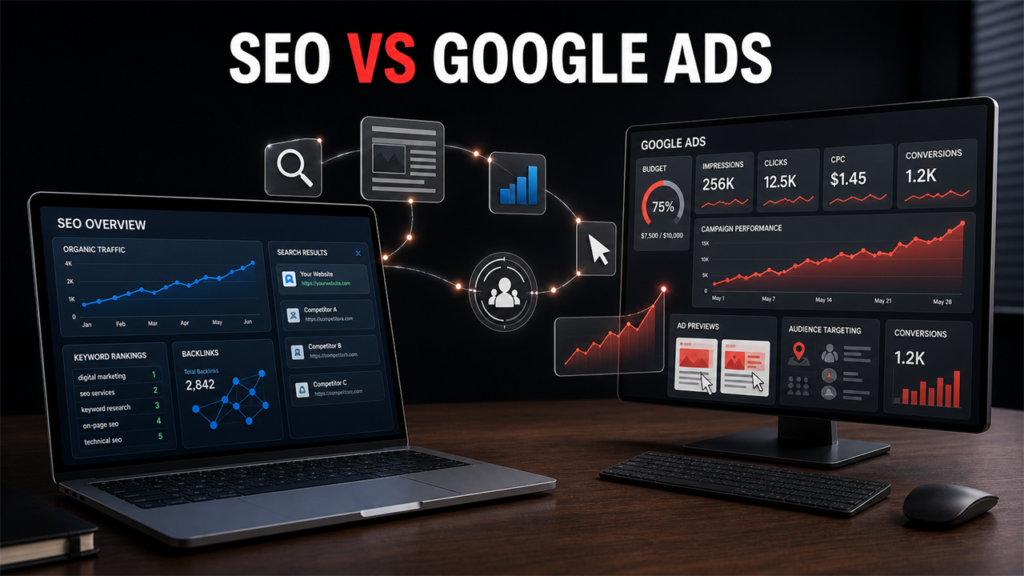
SEO vs Google Ads comes up constantly when businesses look for ways to grow website traffic, leads and sales. Both channels show up in search results. Both cost money in different ways though. Just not the same way. Picking wrong wastes budget and time and neither one refunds. Some searches even shorten the question to just google ads seo without the and or vs. The underlying question stays the same. Which channel deserves the budget first? That’s what this guide actually answers.
What Is SEO and How Does It Work?
SEO stands for search engine optimization. It focuses on earning organic search visibility instead of paying for placement directly. Search engines rank a website based on relevance, content quality and technical signals rather than an ad budget. Keyword targeting sits at the center of the whole process. Pages get built and optimized around the terms real customers actually search for. Results build slowly at first. That’s the honest tradeoff. Traffic tends to compound over months though and keeps growing without an ongoing per click cost once a page actually ranks well.
Working with dedicated SEO services often speeds up that timeline quite a bit compared to handling it without outside help.
What Are Google Ads and How Do They Work?
Google Ads runs on paid search advertising. Businesses bid on keywords and pay each time someone clicks the resulting ad. Placement shows up at the top of search results almost immediately once a campaign goes live. That speed is honestly the entire appeal. A well managed Google Ads account can generate visibility and traffic within days instead of months. Spending stops the moment the budget runs out though. So does the traffic that came with it.
A dedicated Google Ads specialist can help manage that bidding process so spend doesn’t go to waste on the wrong keywords.
SEO vs Google Ads: What Are the Main Differences?
The google ads vs seo comparison usually comes down to five factors: cost, speed, traffic, targeting and long term results.
| Factor | SEO | Google Ads |
| Cost | No direct cost per click. Ongoing investment in content and optimization. | Pay per click. Cost scales directly with traffic volume. |
| Speed | Slow to build. Often months before results show. | Fast. Visibility starts once campaigns launch. |
| Traffic | Grows steadily and compounds over time. | Stops when the ad budget stops. |
| Targeting | Broad keyword targeting through content. | Precise targeting by keyword, location and audience. |
| Long Term Results | Builds lasting organic asset value. | Resets with each new budget cycle. |
Cost behaves pretty differently across both channels. SEO takes ongoing investment in content and optimization without a direct per click charge. Google Ads charges for every single click. Cost scales directly with how much traffic a campaign actually pulls in.
Speed and traffic follow a similar pattern too. Google Ads delivers visibility almost immediately. SEO takes longer to build but keeps compounding once it gains real traction. Google Ads traffic disappears the moment spending stops though. No exceptions.
Which Is Better for Long Term Growth?
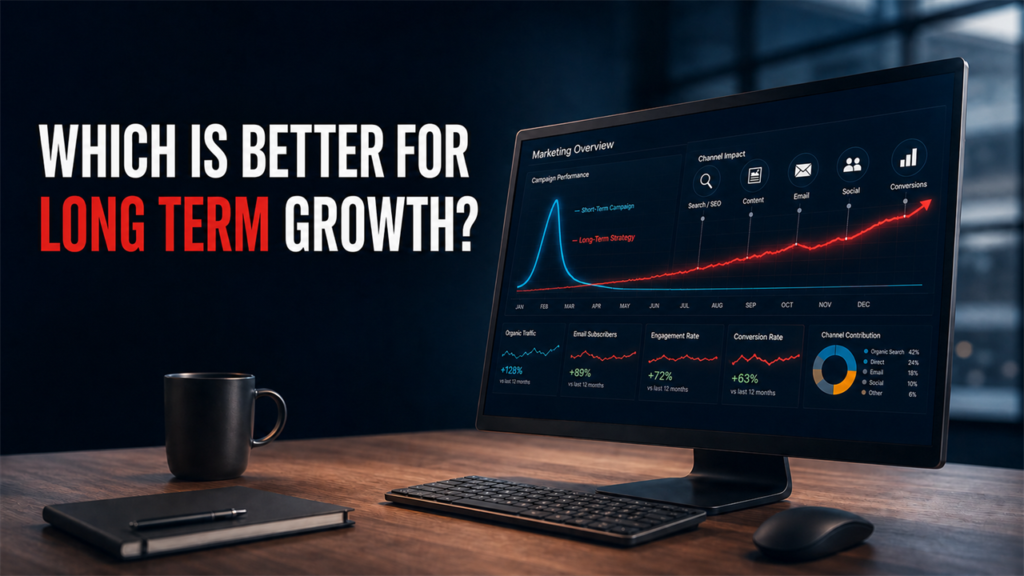
SEO generally wins here. Rankings built through solid content and technical optimization keep generating traffic without continuous ad spend. Google Ads depends entirely on an active budget instead. Turn the spend off and visibility disappears almost immediately. That difference matters most for businesses actually planning years ahead rather than the next quarter.
Which Is Better for Faster Leads and Sales?
Google Ads usually wins this one. Campaigns can launch and start generating clicks within days. Sometimes within hours. That speed matters a lot for businesses needing leads right away rather than months from now. Paid search also captures high intent traffic effectively. Ads target people actively searching for a specific product or service at that exact moment they’re ready to buy.
Can Google Ads and SEO Work Together?
Google ads and seo actually work well together rather than competing for the same budget line. Google Ads can generate leads immediately while SEO builds toward the same goal in the background. Many businesses run adwords and seo side by side for exactly that reason. Ads and seo combined also generate more useful data. Paid search keyword performance often reveals which terms convert best. That information then shapes the organic content strategy too. Sometimes in ways teams don’t expect.
How to Turn SEO and Google Ads Traffic Into More Customers

Traffic alone doesn’t pay the bills. A website that ranks well or runs a strong Google Ads campaign still needs to convert visitors into actual leads or sales. Page speed, clear calls to action and a straightforward user experience all affect whether traffic actually turns into revenue.
Working on conversion optimization alongside SEO and Google Ads usually produces a better return than chasing traffic volume alone ever will.
SEO vs Google Ads: Which Should Your Business Choose?
Budget plays a major role in the decision. A limited budget with room to wait favors SEO. A budget built for immediate spend favors Google Ads instead. Business goals matter too. Long term brand visibility points toward SEO. Immediate lead generation points toward Google Ads. Competition level shifts the answer as well. A highly competitive market can make SEO a lot slower to show results. The timeline closes the loop here. A business that can wait several months should lean toward SEO. A business that needs results this month should lean toward Google Ads instead.
Conclusion
SEO supports long term organic growth that keeps paying off well after the initial work is done. Google Ads provides faster visibility and leads when time matters more than patience does. Using both together often works best honestly. It gives a business immediate traffic from ads while SEO quietly builds a lasting foundation underneath it. The right mix ultimately depends on budget, timeline and business goals. It’s not about which channel sounds better in a meeting.
Frequently Asked Questions
Is SEO better than Google Ads?
Neither one is universally better. SEO tends to win for long term organic growth. Google Ads tends to win for immediate visibility and leads. The right choice depends on budget, timeline and business goals rather than one channel being objectively superior.
How long does SEO take compared to Google Ads?
SEO typically takes three to six months before meaningful ranking improvements show up. Competitive industries can push that timeline even longer. Google Ads can generate clicks and leads within days of launching a campaign. That speed difference is really the main tradeoff between the two channels.
Which gives a better ROI: SEO or Google Ads?
ROI depends heavily on the business and the timeline being measured. Google Ads often shows a clearer short term ROI since every click and conversion gets tracked directly. SEO frequently produces better ROI over a longer stretch. Organic traffic just keeps arriving without a continued per click cost attached to it.
Can SEO and Google Ads work together?
Yes. Most businesses probably should run both. Running both channels together is common and often quite effective. Google Ads covers the immediate traffic gap while SEO builds toward long term organic visibility in the background. Data from paid campaigns can also inform SEO keyword strategy.
Should a small business choose SEO or Google Ads first?
It really depends on how quickly the business needs results. A small business needing leads immediately should start with Google Ads. A small business that can invest in longer term growth should start with SEO instead or run both at a reduced budget simultaneously.
What happens when you stop Google Ads compared to SEO?
Google Ads traffic stops almost immediately once spending stops. No grace period. SEO traffic doesn’t disappear the same way though. Rankings built through content and optimization tend to hold steady for a while even without continued active work. Neglecting SEO entirely over time can eventually cause rankings to slip anyway.